The deep roots of inequalities

The status and drivers of economic inequalities within and between countries – with specific examples from India and Indonesia
Read the report (English) | Bahasa version
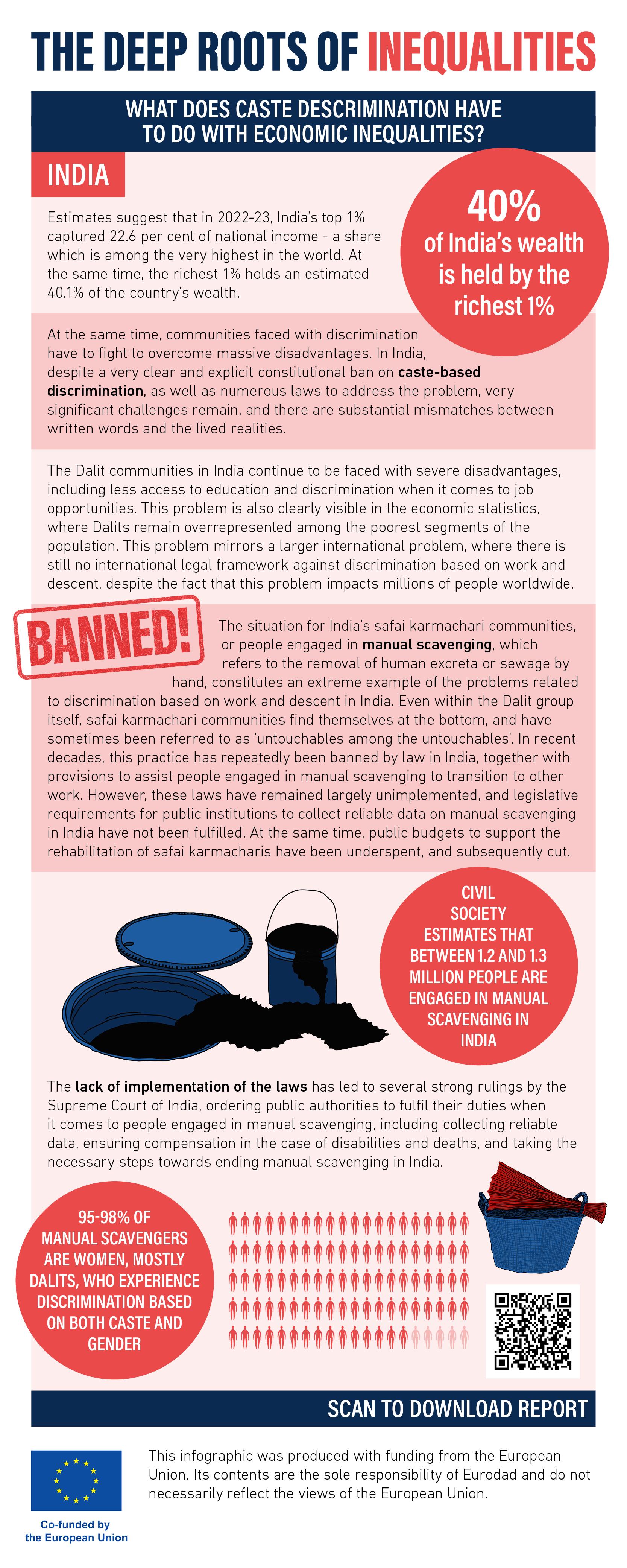
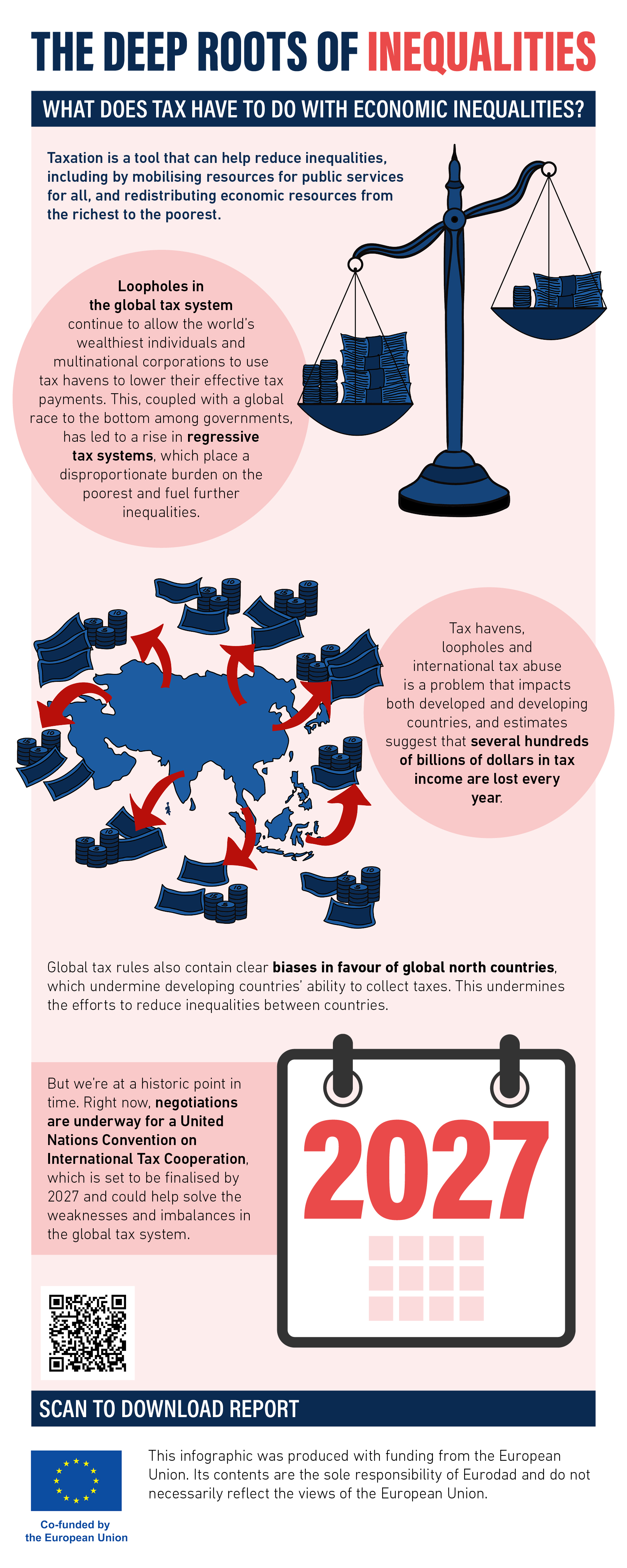
Download the infographics: global inequalities, inequalities in Indonesia, inequalities in India
With the 2030 Agenda for Sustainable Development, adopted at the United Nations (UN) in 2015, the world’s governments decided to “leave no one behind” and adopted the target of reducing inequalities between and within countries by 2030.
These elements are strongly interlinked. On the one hand, inequalities between countries greatly constrain and limit the scale of resources available in developing countries to ensure that no one is left behind. And on the other hand, equality within countries is crucial for ensuring that the available resources reach those most marginalised and in need. With five years to go before the deadline, this report looks at the state of economic inequalities globally (Chapter 3.1) and the role that the international tax rules play in increasing or reducing inequalities between countries (Chapter 3.2).
Furthermore, the report assesses the state of economic inequalities in two focus countries, namely Indonesia (Chapter 4) and India (Chapter 5), and looks specifically at the situation of communities faced with economic inequalities linked to discrimination. The intersectionality of economic and gender inequalities is the focus in relation to Indonesia (Chapter 4.4), while for India, the report assesses the interlinkages between economic inequalities and discrimination in relation to caste, with a special focus on safai karmachari communities – or people engaged in or affected by manual scavenging (Chapter 5.4).
Lastly, the report also assesses the role of the national tax systems in relation to economic inequalities in Indonesia (Chapter 4.5) and India (Chapter 5.6).