

Reflections on the EU-CELAC Summit 2025: The EU must go beyond the Global Gateway if it truly cares

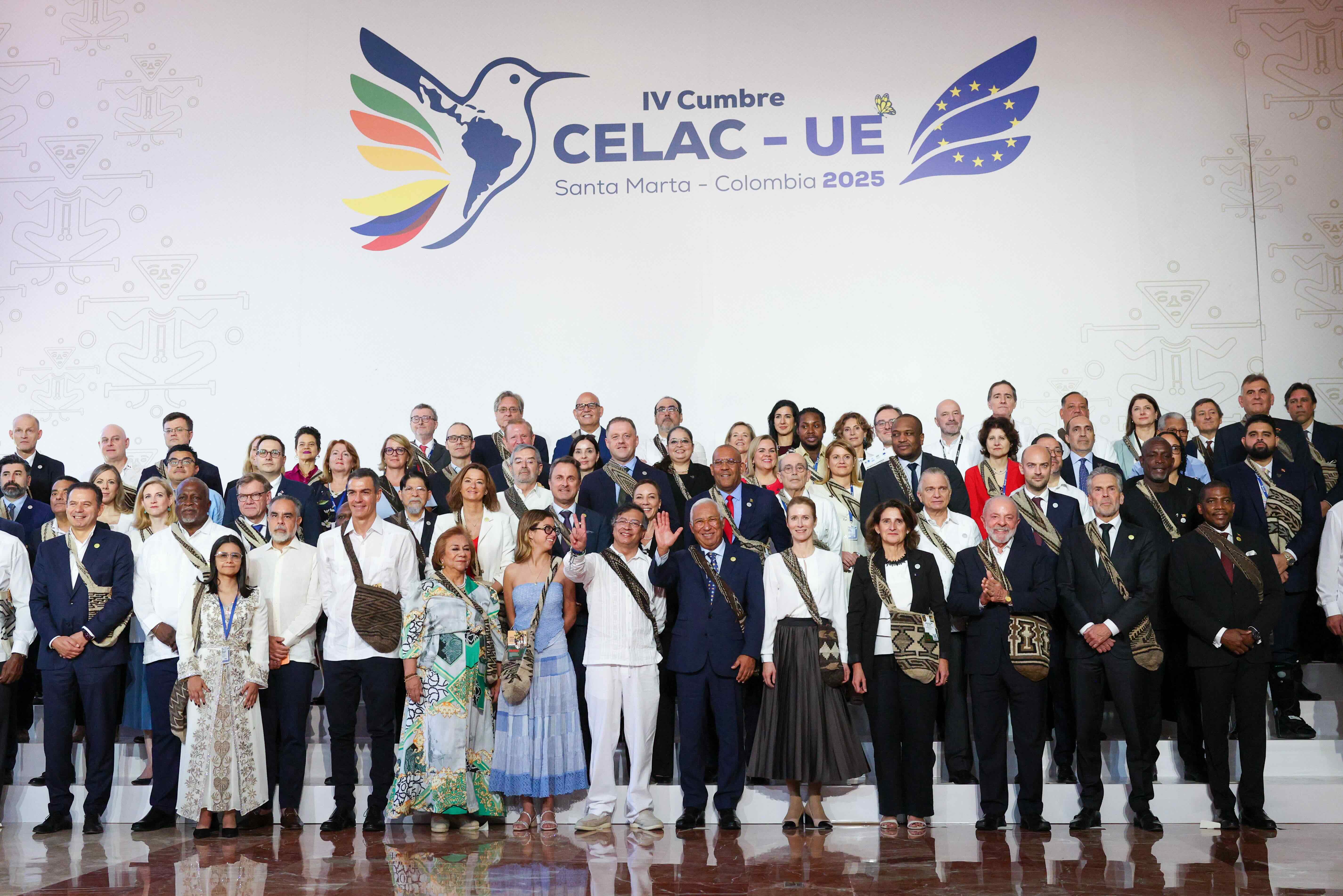
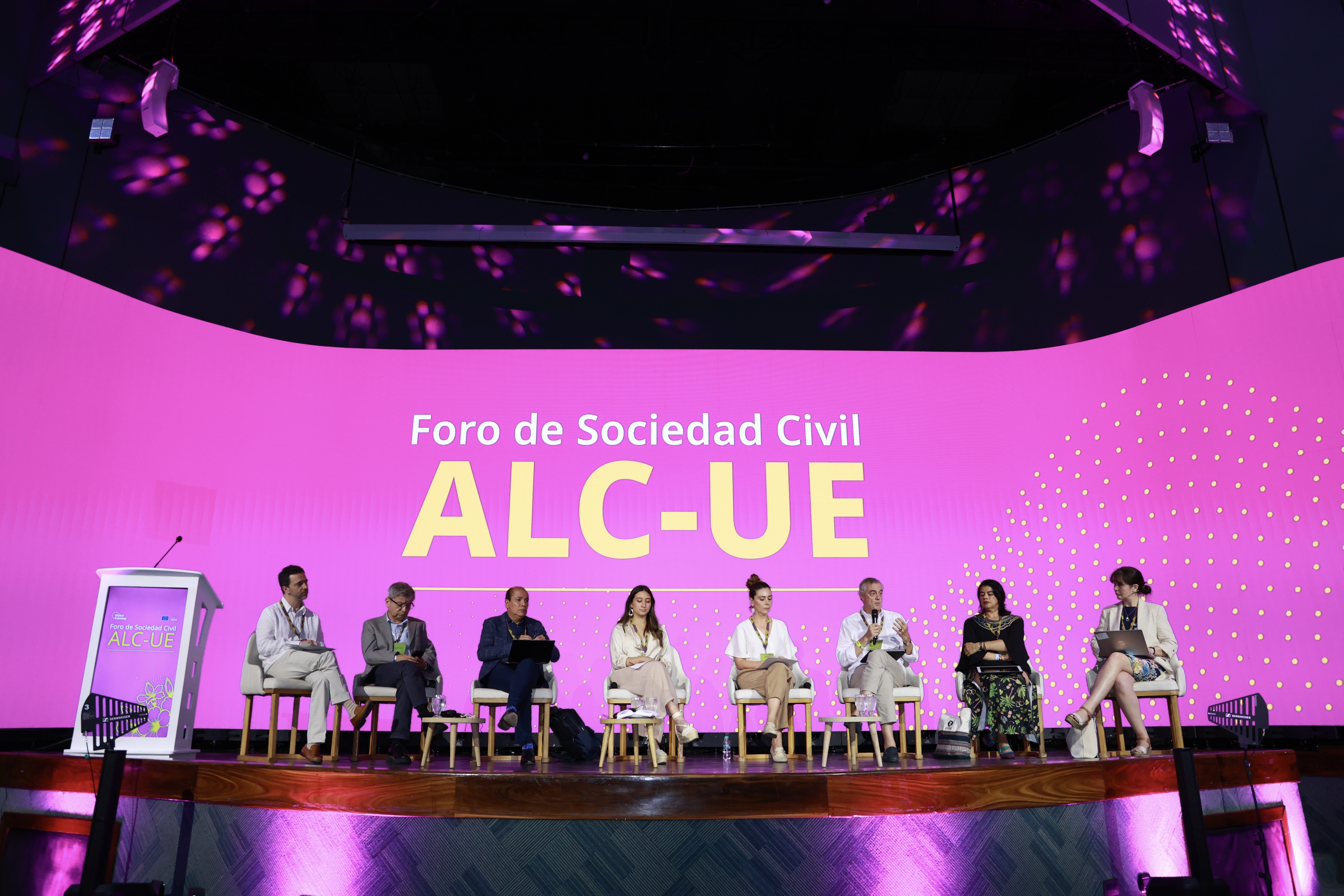
In the past week, EU officials have been in Colombia meeting with leaders from Latin America and the Caribbean (LAC) to thrash out their joint agenda for the coming years. I was there on behalf of Eurodad taking part in the EU-CELAC Civil Society Forum and other side activities – to both hold the EU to account and to connect with our partner civil society representatives in the LAC region.
The IV EU-CELAC Summit – which resulted in a joint declaration – had some promising rhetorical outcomes. But civil society was also concerned as private finance - and the EU’s Global Gateway - took centre stage once more.
The bright side
EU-CELAC leaders committed to multilateralism, human rights, gender equality, climate justice and the Agenda 2030. It is worth celebrating the bi-regional Pact on Care that the EU, together with 16 countries in Latin American and the Caribbean, signed up to. The Pact aims at ‘strengthening care systems and ensuring that access to quality and affordable care services becomes a shared priority across both regions’. Building on the Compromiso de Sevilla, they also recommitted ‘to the continued reform of the international financial architecture so that it may be more inclusive, representative, and effective’, and ‘to explore options to address debt sustainability’. Furthermore, they reaffirmed that Official Development Assistance (ODA) ‘remains an essential component of international cooperation’ and acknowledged ‘the need to reverse declining trends in ODA’, reiterating the longstanding target of 0.7% of gross national income. These are all welcome commitments that must be turned into action to ensure that they remain credible.
The challenges
Despite the promising rhetoric outlined above, the role of private finance in development continued to take centre stage, both in the joint statement and in the side conversations. The problem was it was not accompanied by the promotion of binding clauses on environmental issues, human rights, and tax justice. The EU vigorously promoted the Global Gateway strategy - which uses development resources to subsidise private investments in infrastructure across the Global South. It is this strategy that is becoming a central external action approach.
Civil society raised questions about the Global Gateway, because of problems associated with its implementation so far, including the lack of transparency. We questioned whether it is really the best offer to Latin America and the Caribbean. The region is home to 60 per cent of the world’s biodiversity and generates about 65 per cent of its electricity from renewable resources - double the global average. A partnership could be built to support and strengthen the region in protecting its rich biodiversity and use of renewable energy for the benefit of its people. However, in its current form, the Global Gateway risks becoming a form of ‘green extractivism’ - an unwelcome new way to showcase European investment to promote the extraction of natural resources.
As a strategy that uses public funding the Global Gateway must be transparent, co-designed by partner countries and inclusive of civil society voices, and sustainable development-oriented, rather than focused on serving the EU’s geostrategic interests. It must allow for genuine industrialisation strategies, placing countries away from the multiple dependencies that they face, in relation to technology, natural resources and debt.
Moving forwards
There were other issues that were missed in the discussion but which are indispensable ingredients for a genuine partnership. First of all, the EU must support international financial architecture reform to address tax and debt within UN frameworks rather than in institutions where the Global South is not equally represented in voice or vote. This will be key to ensure domestic resource mobilisation to support high quality universal public services. Moreover, public non-debt generating resources for development and the climate agenda must be mobilised in an ambitious and predictable way. Climate finance must come in accordance with the principles of shared but differentiated responsibilities. A just transition will not be possible without fair financing.
Right now, my colleagues are on the frontline of the evaluation of how the tax and climate agendas evolve, with meetings in Nairobi - at the negotiations on the UN Tax Convention - and in Brazil - at COP30. The bi-regional engagement to push for fair financing in the public interest will continue to be high on our agenda in the coming years.