Momentum builds in UN Tax Convention negotiations - trillion-dollar treaty remains within reach

#UNTaxConvention #TaxJustice #DebtJustice #MakePollutersPay #GlobalGateway #GenderJustice #EraOfJustice
Top story
Momentum builds in UN Tax Convention negotiations - trillion-dollar treaty remains within reach
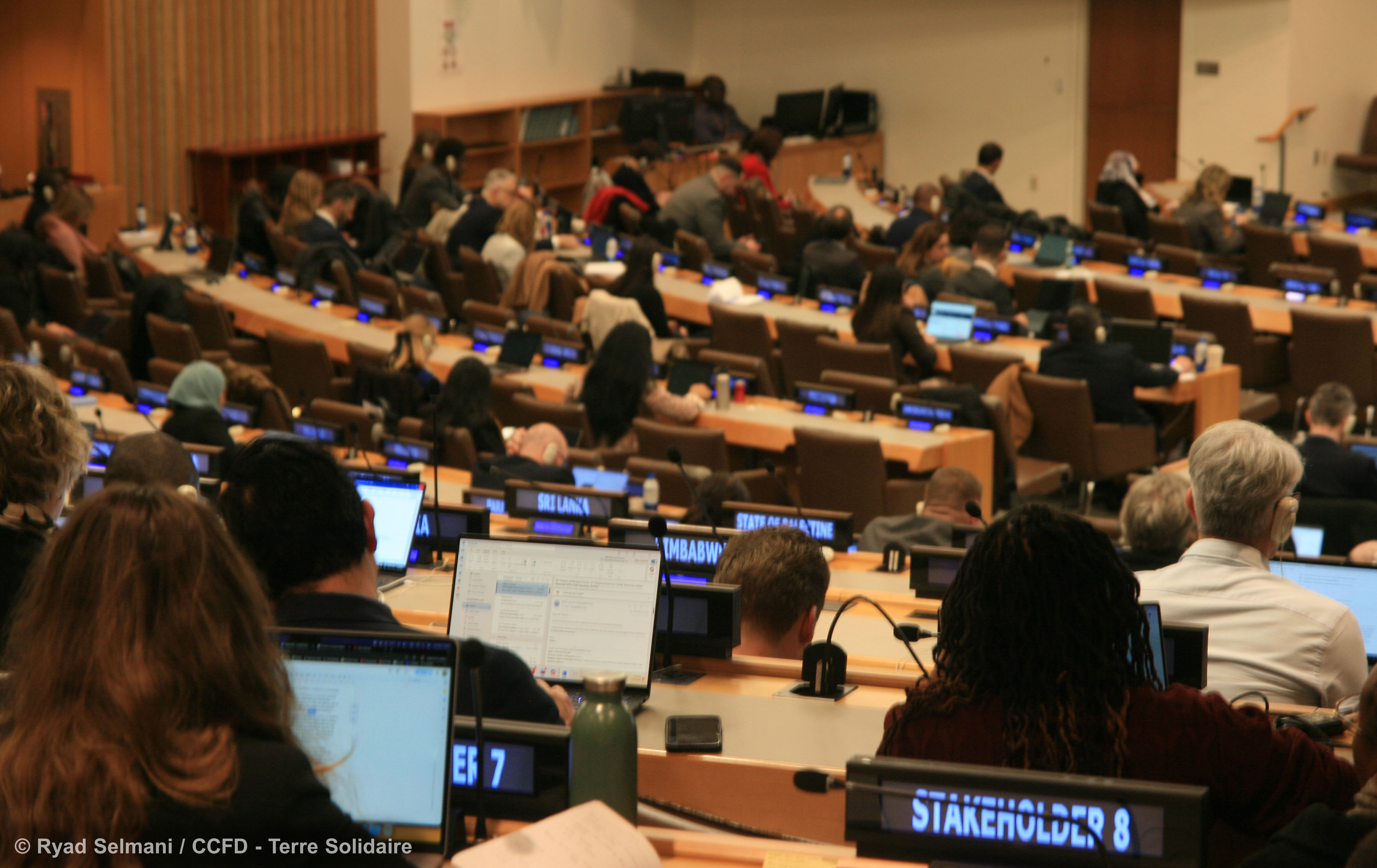
Last week, the 4th negotiation session for the UN Framework Convention on International Tax Cooperation came to a close. For two weeks, delegates from around the world discussed what should be in the new Convention, which is set to be finalised by mid-2027, along with two early protocols.
This historic Convention has the potential to become a trillion-dollar treaty that can crack down on tax havens and boost public financing for development and environmental protection around the world. It's also a pivotal opportunity to reduce inequalities – both within and between countries.
Read LATINDADD's press release (in Spanish)
Read GATJ's press release and the daily Chronicles from New York
News
Call for grant applications - Connecting the dots: Linking economic, gender and climate justice to tackle global challenges
Eurodad is looking for groups that would help engaging more people in Europe, particularly young people, in mobilisation and advocacy for economic, gender and climate justice as interconnected solutions that contribute to sustainable development and tackle global challenges, at both local and global levels.
Submit your application by 26 March
Colombia and the Netherlands to host First Conference on Transitioning Away from Fossil Fuels on 24-29 April
Announced at COP30, the First Conference on Transitioning Away from Fossil Fuels will take place in Santa Marta (Colombia). Its objective is to initiate a concrete process to identify and advance enabling pathways to implement a progressive transition away from fossil fuels creating sustainable societies and economies. This process will be informed by the experience and perspectives of national and subnational governments, academia, Indigenous Peoples, Peoples of African Descent, peasants, civil society, workers, the private sector, and other key actors at different stages of the transition. Organisations can register their interest to participate by 26 February.
Blogs
Global Gateway: Advancing European capital at the expense of people and planet
by Nick Hildyard / CounterBalance
The purpose of the European Commission’s Global Gateway Strategy is clearly to keep the EU flag firmly planted all over the countries deemed to be part of the European Union’s sphere of global influence; and to put those countries to work on its behalf.
Debt justice to overcome the inequality, climate and nature crises
by Matthew Martin / Equals
Drawing on his personal experience, Matthew Martin argues that the global debt crisis is driving inequality, poverty, and climate vulnerability. Countries in the Global South now spend more on debt than on essential services like education and health. He calls for urgent debt cancellation, fairer creditor participation, and linking debt relief to Just Green Transition strategies to tackle inequality, climate change, and nature loss together.
Reports
Blended finance and the illusion of development: Lessons from the EFSD+ for the next EU budget
by ActionAid, CONCORD Europe and Eurodad
This report warns that proposals for the next Global Europe Instrument in the 2028–2034 Multiannual Financial Framework risk weakening the EU’s development mandate by prioritising investment-led approaches over poverty reduction and inequalities. Drawing on lessons from the current EFSD+, it calls on the European Parliament and Council to safeguard grant-based funding, strengthen oversight of blended finance and guarantees, and uphold the EU’s development effectiveness commitments.
Taxing fossil fuel profits, not consumers
by CAN Europe
This study shows that taxing the profits of the big polluters wouldn’t hurt households or businesses. Instead, it would reduce excess returns for shareholders who have not yet excluded fossil fuels from their investment portfolio, incentivising a gradual reallocation of capital to renewables.
Useful resources
Sign the petition to stop the debt vultures

by Debt Justice UK
Debt vultures are speculators: rather than lending money directly, they scour the horizon looking for countries in crisis whose debt they can buy up at rock bottom prices. Then they threaten legal action, seemingly strong-arming countries into full repayment, and delivering themselves vast profits by draining much-needed resources from communities around the world.
Reset with side effects: the failure of voluntary debt restructuring in the case of Ukraine
by Erlassjahr
In December 2025, Ukraine restructured US$ 2.6 billion in GDP warrants, converting them into Eurobonds to avoid potentially massive future payouts. While this reduces short-term risks, new clauses—especially loss reinstatement provisions—could inflate claims and complicate further restructuring. The case highlights the limits of voluntary, market-based debt workouts and underscores the need for statutory mechanisms to ensure fair creditor participation.
Geopolitics on the rise, IMF on the decline: Insights from the updated Global Financial Safety Net (GFSN) tracker
by Laurissa Mühlich, Marina Zucker-Marques and Barbara Fritz / Global Development Policy Center (Boston University)
The latest release of the GFSN Tracker shows that developing countries continue to face the most limited access to its resources. The database is now updated with crisis finance arrangements signed up until December 2025, and the tracker maps both historical and active emergency financing arrangements to offer a comprehensive view of who can access crisis finance, on what terms, and at what scale.
New report series - Sovereign debt in focus
by IDEAS
Since the beginning of the year, International Development Economics Associates (IDEAS) has released a new series of reports examining key dimensions of sovereign debt in the Global South. It covers country cases such as Zambia, Ecuador, and Argentina, as well as China’s evolving role in Africa.
- Sovereign debt in Zambia: Composition, evolution, and implications
- Sovereign debt and debt restructuring: A case study of Zambia
- Dollarisation and debt: Theoretical insights and lessons from the case of Ecuador
- China’s evolving role in Africa: Banker, debt collector, and rescuer
- Argentina: Recent sovereign debt restructurings (2003-2020)
Jobs
• Communications officer | Center for Economic and Social Rights (CESR)
Events
25 February | Online | Webinar: "2025 Feminist Critical Trends - Report launch and strategy session"
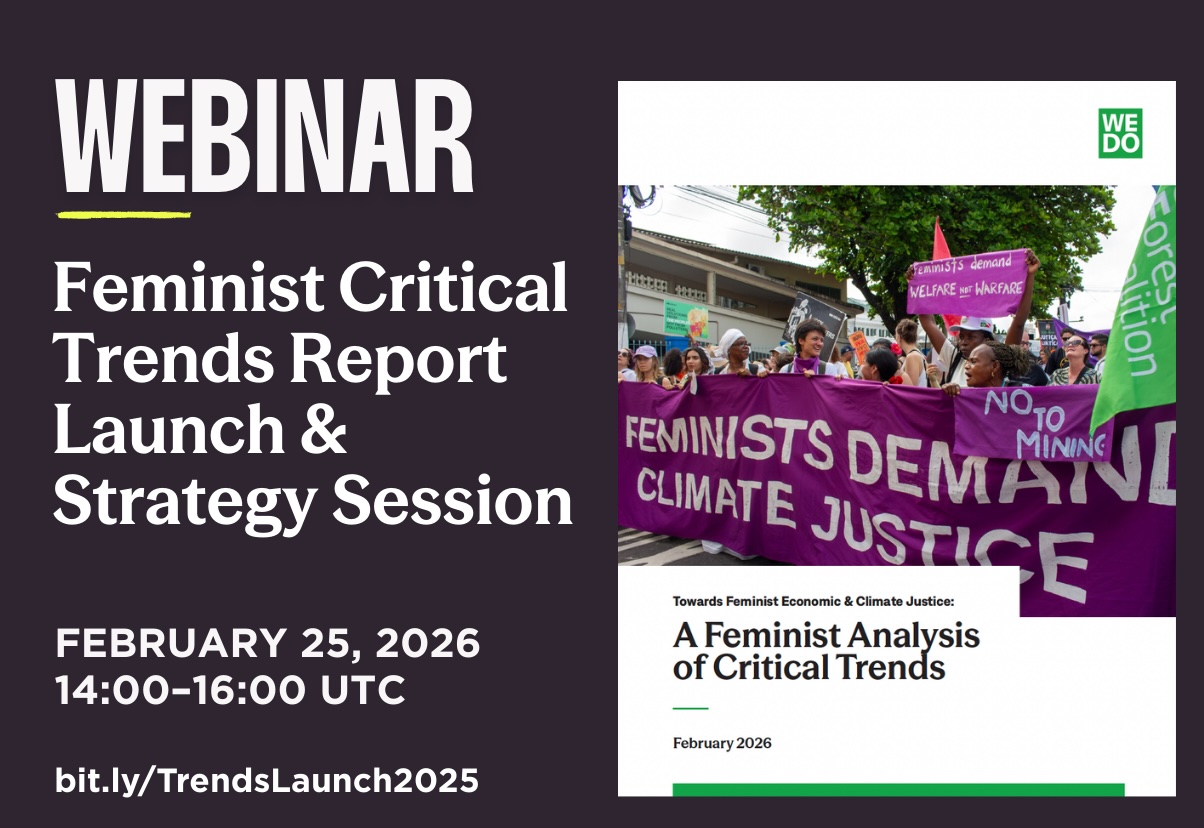
This webinar offers feminists and allies a space to explore WEDO's 2025 Feminist Critical Trends Report. Published annually since 2023, this report provides a snapshot of progress and challenges in seven key areas: tax, trade, debt, corporate capture, global economic governance, feminist climate finance, and the systems change required to achieve care for people and planet. Author Arimbi Wahono will first present the report, followed by in-depth discussion with colleagues from FARN, MENAFem Movement, and ActionAid International. Interpretation will be available in Arabic, French, Spanish and English.
5 March | Online | Webinar: "The way ahead on debt: Reform, resilience, and leadership in a fragmented world"
The Debt Relief for a Green and Inclusive Recovery (DRGR) Project webinar will examine the next phase of global debt reform ahead of COP31 and upcoming G20 and G7 discussions. It will explore how emerging UN spaces—like the Borrower Platform and Seville Forum on Debt—can overcome fragmentation, align diverse actors, and translate momentum into action. Bringing together policymakers, experts, and civil society, the webinar will highlight practical pathways and innovative options for reform. It will also honor Shamshad Akhtar, founding DRGR Co-Chair, whose leadership shaped global debates on debt, development, and economic justice.
5 March | Online | Webinar: "Gender, debt and fossil fuels: A mapping of key insights from Africa"
Africa is on the frontlines of the global polycrisis, where debt, extractivism, and economic dependency reinforce inequality and patriarchy, disproportionately affecting women and girls. The launch of this new report examines these systemic intersections and explores how a Fossil Fuel Treaty could support a Just Transition advancing climate, economic, and gender justice. Ahead of the 70th Commission on the Status of Women, the webinar will highlight debt and fossil fuel dependency, gendered oppression, and solutions led by African women leaders, with reflections and recommendations from the report’s authors and contributors.
 |
This newsletter has been produced with co-funding from the European Union, Bread for the World and Norad. The contents of this publication are the sole responsibility of Eurodad and can under no circumstances be regarded as reflecting the position of the funders. |